
Vertical turbine pumps for deep well applications
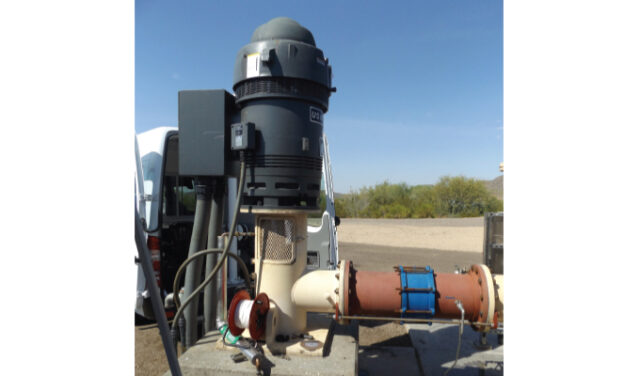
Vertical turbine pumps can offer great flexibility in their applications without sacrificing performance in industrial markets or running afoul of regulatory issues for municipalities. National Pump Company, a recognized market leader in vertical turbine pumps, highlights its line of deep well vertical turbine pumps, engineered to deliver outstanding reliability and versatility for demanding water extraction projects.

With hydraulics spanning from 6 to 30 inches, these pumps support flexible system design to accommodate a broad range of well sizes and can deliver flows up to 20,000 gallons per minute, making them the preferred choice across a variety of sectors. The pumps are capable of reaching heads of up to 2,500 feet and offer power ratings up to 2,000 horsepower, providing dependable performance for both deep sources and high-elevation pumping needs.
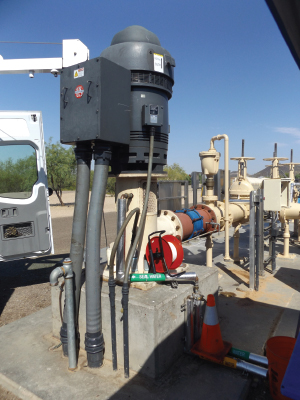
CUSTOMIZED TO MEET TOUGH CONDITIONS

Durability and customization are central to every National Pump vertical turbine. The pumps feature discharge heads available in cast iron, ductile iron, or fabricated steel. Components are available in a choice of materials, including cast and ductile iron, silicon carbide, bronze, aluminum bronze, and a full range of stainless steels such as 304, 316, and duplex, ensuring resilience against corrosion, abrasion, and harsh chemical exposure. Customization extends to oil lubricated or water injection line shafts, threaded or flanged column construction, and packing or mechanical seal options to meet diverse operating conditions and site specifications.

CERTIFIED FOR PERFORMANCE

The ISO 9001 Certified Quality Management System, along with pump certifications such as NSF/ANSI/CAN 61 and NSF/ANSI 372, ensures compliance with strict health, safety, and drinking water standards for municipal and industrial systems. All models are tested against Hydraulic Institute compliance standards, guaranteeing validated performance and efficiency.

AT WORK THROUGHOUT THE WORLD

National Pump covers all deep well needs with a comprehensive offering of precision-matched discharge heads, lubeline assemblies, column pipe, custom impellers, and bowl assemblies designed for consistent, reliable pumping capacity. All pump models are stocked in standard materials of construction and can be customized to customer specifications, with National Pump’s solutions hard at work in municipal water systems, agricultural irrigation, mining, industrial applications, and at premier golf courses.


FEATURES AT A GLANCE

  • 6 to 30-inch hydraulics
  • Flows to 25,000 gallons per minute
  • Heads to 2,500 feet, up to 2,000 horsepower
  • Cast iron, ductile iron or fabricated steel discharge heads
  • Components available in cast and ductile iron; silicon, aluminum, and 304, 316 and duplex stainless-steel construction
  • Oil lubricated or water injection line shaft
  • Threaded or flanged column construction
  • Packing or mechanical seals
  • Certifications (when specified): ISO 9001 Certified Quality Management System, NSF61 and 372 Pump Certification
  • Testing to Hydraulic Institute compliance standards

National Pump Company is a leading manufacturer of vertical line shaft turbine, submersible, and booster pumps, serving a wide range of markets, including industrial, municipal, and API applications.  Headquartered in Glendale, Arizona, at an ISO 9001:2015 certified facility, National Pump operates three strategically located build and service centers across the United States, ensuring responsive customer support and rapid product delivery. The company’s complete pump line can be NSF certified, and standard products are available for quick shipment with off-the-shelf components to meet diverse customer needs. National Pump Company’s vision is to be a leading fluid pumping solutions provider in the global water and energy markets through collaboration, innovation and engineering excellence. For more information, visit www.nationalpumpcompany.com.
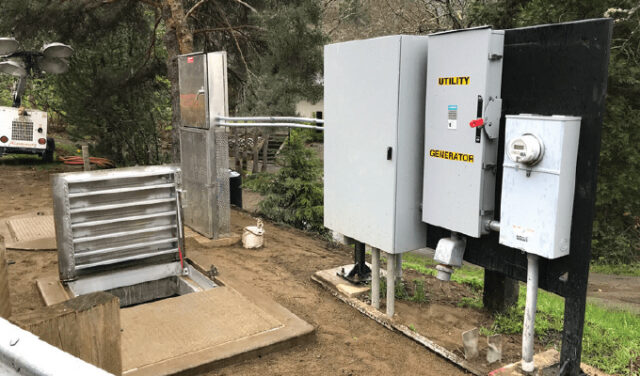
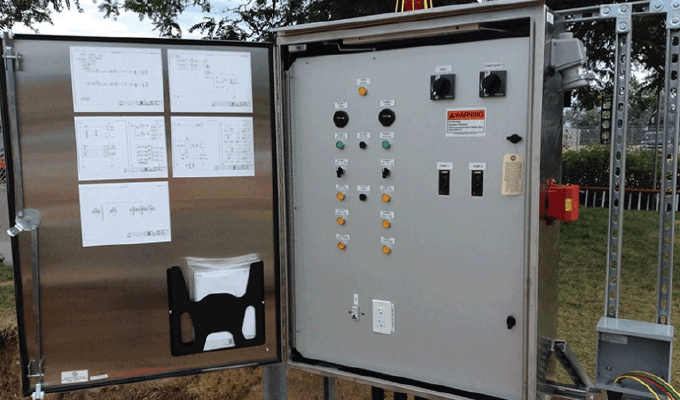
Three levels of continuous monitoring for pump systems

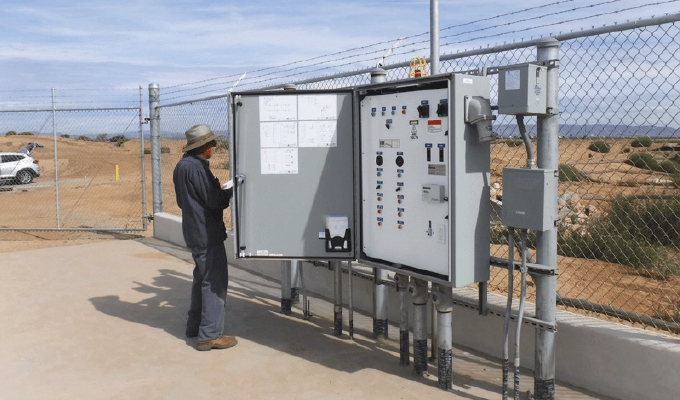
Pump systems are often out of sight and out of mind—until something goes wrong. Whether serving domestic water, wastewater, irrigation, or fire protection applications, pumps are mission-critical assets that demand reliable operation. As infrastructure ages and staffing levels remain lean, continuous monitoring has become less of a luxury and more of a baseline expectation.

Not all monitoring solutions are created equal, however. In practice, pump system monitoring can be categorized into three distinct levels, each offering increasing degrees of visibility, functionality, and operational control. Understanding these levels helps owners and engineers select a solution that aligns with system criticality, risk tolerance, and budget.

LEVEL 1: BASIC ALARM NOTIFICATION

Reactive Awareness Through Autodialers

The most fundamental form of continuous monitoring relies on alarm-only notification. These systems typically consist of a standalone autodialer connected to discrete alarm points within the pump control panel. Communication is commonly provided via cellular service or traditional POTS lines.

At this level, monitoring is event-driven. When a fault occurs—such as pump failure, high water level, low pressure, or loss of power—the autodialer sends a voice call, text message, or email to a predefined contact list. The system provides awareness that something has happened, but little context beyond the alarm condition itself.

What operators gain:

  • Immediate notification of critical failures
  • Simple, low-cost implementation
  • Minimal configuration and IT involvement

What they don’t:

  • Real-time system status
  • Historical trending or performance data
  • Any form of remote interaction

Level 1 monitoring is best suited for small or low-risk pump systems, remote installations, or facilities where staffing is readily available to respond on site. While limited, autodialers still play an important role in preventing prolonged outages or catastrophic failures by ensuring alarms are not missed.

LEVEL 2: CLOUD-BASED MONITORING

Real-time Visibility Without Remote Control

The next step up introduces continuous data visibility through an internet-connected monitoring platform. These systems use a cellular or Ethernet gateway to transmit operating data to a cloud-based dashboard accessible from a web browser or mobile device.

Unlike basic autodialers, Level 2 monitoring allows operators to see real-time values such as pressures, flows, tank levels, temperatures, and pump status. Alarm notifications are still provided, but they are now paired with context—operators can log in immediately to understand what is happening before dispatching personnel.

Importantly, these systems are intentionally one-way. Data flows from the field to the user, but no remote control is permitted. Pumps cannot be started, stopped, or adjusted from the dashboard.

What operators gain:

  • Live system conditions and trends
  • Historical data for troubleshooting and maintenance planning
  • Improved situational awareness across multiple sites

What they don’t:

  • Remote control or setpoint changes
  • Remote alarm resets that affect system operation

Level 2 monitoring is increasingly popular for municipal and commercial applications, particularly where policy, cybersecurity concerns, or regulatory requirements limit remote control. It strikes a balance between operational insight and system simplicity, enabling more proactive maintenance without increasing risk.

LEVEL 3: FULLY INTEGRATED SCADA

Complete Visibility and Control

At the highest level, continuous monitoring is fully integrated into a Supervisory Control and Data Acquisition (SCADA) system. Here, monitoring and control are inseparable. Programmable logic controllers (PLCs), field instrumentation, and communication networks work together to provide a comprehensive, two-way interface between operators and pump systems.

Through secure remote access, operators can view detailed graphical HMIs, acknowledge and reset alarms, adjust setpoints, change operating modes, and start or stop equipment. Advanced systems may also incorporate automated sequences, performance analytics, and reporting tools.

What operators gain:

  • Full real-time and historical system visibility
  • Remote operational control
  • Centralized management of multiple stations
  • Faster response to abnormal conditions

What it requires:

  • Higher upfront cost and system complexity
  • Cybersecurity planning and user access management
  • Ongoing support, training, and maintenance

Level 3 solutions are typically reserved for critical infrastructure, large municipal systems, and complex pump networks where downtime carries significant consequences. When properly designed and secured, SCADA systems offer unmatched operational efficiency and control.

Selecting the Right Level

Choosing the appropriate monitoring level is not about selecting the “best” technology—it is about selecting the right one. Key considerations include system criticality, consequences of failure, staffing models, regulatory constraints, and long-term operational goals. In many cases, facilities evolve over time, starting with basic notification and expanding toward greater visibility or control as needs change.

CONCLUSION

Continuous monitoring for pump systems exists on a clear progression: notification, visibility, and control. Each level serves a purpose, and each has a place in modern infrastructure. By understanding these distinctions, engineers and owners can make informed decisions that improve reliability, reduce risk, and ensure pump systems perform as intended—long before an alarm ever sounds.


Romtec Utilities specializes in the design and supply of the best, most practical, most affordable, and most sophisticated site-specific pumping systems available worldwide. We have completed hundreds of projects across the United States and have supplied packages for international installations. For more information, visit www.romtecutilities.com.

Award-winning wastewater treatment plant continues to shine

Floods have proved a major challenge for the team at Snohomish WWTP.

At the Wastewater Treatment Plant (WWTP) in Snohomish, Washington, just north of Seattle, nothing has really visibly changed with the Lakeside Screw Pumps that were installed in 1995—apart from the color.

Two 72-inch screw pumps and one 42-inch screw pump from Lakeside Equipment Corporation are now red (from their original blue), simply to match the plant’s color scheme, and more than three decades are on, with the help of new lower sealed bearings, are still happily working away. The paint job came about after seventeen years of service in 2012 when the highly robust screw pumps were treated to a sandblast and clean up. The thirty-years-plus of service is testament not only to Lakeside as the manufacturer, but to the diligent team of three at the City of Snohomish Wastewater Treatment Plant for their maintenance regime, especially in light of increasingly changing and challenging weather conditions.

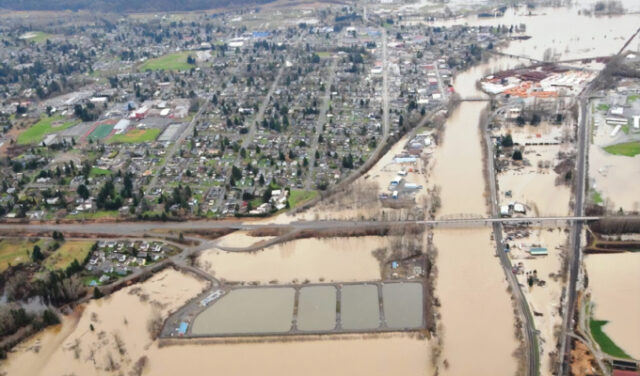
Serving a population of 10,000, the plant has, in recent years, had to endure more and more instances of flooding that effectively leave the facility on an ‘island’. Heavy rain that melts the winter snow on the nearby Cascade mountain range sends excessive volumes of water rushing into the river that the facility discharges to. The Snohomish River can also be adversely affected by tides from the Salish Sea as well.

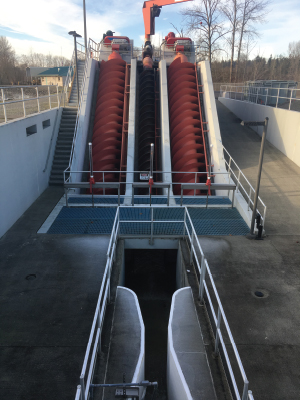
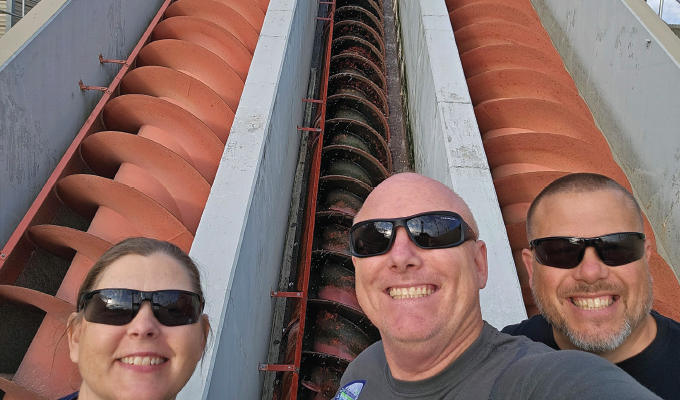
The Lakeside screw pumps at Snohomish and the Parshall flume used to measure the incoming flow.

PROBLEMS WITH THAWING SNOW

Duane Leach, senior wastewater treatment plant operator for the city of Snohomish, says, “We get plenty of rain here anyway, but warmer winters and a spring that seems to be arriving earlier and earlier, causes the problems we face with the thawing snow.

“We’re gradually separating the flows in our pipe network, of which about half still contains a mix of sewage and stormwater. With 50 percent of that stormwater now going directly to our old lagoon, we’re under slightly less pressure, but during many eventful challenges that the plant has faced, the Lakeside screw pumps have always been a constant, working away, especially the 42-inch unit, which is in use 24/7. Depending on flows, our SCADA system and our PLCs (programmable logic controllers) will make one or both of the 72-inch screw pumps kick in, but the 42-inch runs all the time.”

Leach, who has been at Snohomish WWTP since 2013 and working in sewer department prior for the city since 2007, adds, “Once per month we grease the upper bearings. Once a year we grease everything. We clean the headworks and the screw pumps once per week to make sure that there’s no buildup of odors. We use a fire hose to spray down all the built up of FOG (fats, oils, grease) along with the dreaded flushable, oh wait, not to be flushed wipes, while any gravel or rocks are carefully removed. During that weekly clean, we simultaneously run all three screw pumps to again check that everything is running smoothly.

“We changed out a motor quite some time ago, along with the upper gear box has been refurbished, and when we took them out for sandblasting in 2012, we switched to sealed bearings. So long as we routinely maintain the screw pumps, they work great. We love them—and their reliability is perfect with only three of us on site.”

Every day without fail, Leach and one his colleagues dutifully walk around the entire plant, with eyes, ears and noses wide open.

“It’d be much easier to go round in the truck,” says Leach, “but on foot we can see and hear everything.”

Leach is usually joined on the daily inspection round by Frank Schorsch (maintenance worker/operator), who has worked at the plant since 2007, or sometimes by Karen Allen (lab technician/operator), who joined in 2004. The team’s long-standing service continuity allows a vast amount of experience and knowledge to be called upon.

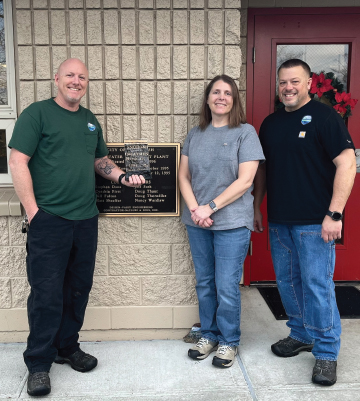
Left to right: Duane Leach, Karen Allen, and Frank Schorsch, who run Snohomish WWTP.

POPULAR FOR RECREATION AND SALMON FISHING

Despite being open (uncovered) screw pumps, the city of Snohomish WWTP lives in harmony with its neighbors, free from noise and odor complaints. In fact, there is a popular walking trail for residents and visitors around the plant, which prior to its construction, was basically a 25-acre settling pond.

“Our Snohomish River is very popular for recreation and salmon fishing, so we are very proud of our work to protect it,” added Leach.

In 1996, stringent new total maximum daily loads (TMDL) immediately challenged the plant to handle its ammonia levels, but the installation of a submerged fixed film solved the problem. Since then, the WWTP has won multiple ecology awards for its good practices, including its most recent accolade: The Lakeside Equipment Corporation Plant of the Year.

“This was totally unexpected,” continues Leach. “A real honor. You have to be spot-on with your site maintenance to be considered.”

Lakeside’s long-standing wastewater equipment representative for the region, Goble Sampson, also sang the praises of the city of Snohomish WWTP. Based at numerous locations across the Western United States, Goble Sampson’s Joshua West, who works in the company’s Washington office, comments, “We’re always here to provide back up to the city, whose treatment plant team set a fantastic example that the whole industry should be very proud of. Duane, Frank, Karen, and the city of Snohomish thoroughly deserve the award for their dedication in maintaining such a well-run wastewater treatment plant.”

Lakeside Equipment Corporation (established 1928) is blessed with a large number of plants, that decades on, are still in incredible working order. It is only right that hard working treatment plant operators, who are largely unsung heroes, get the recognition that they deserve.

Goble Sampson made very strong recommendations about the city of Snohomish, and after very careful consideration, when comparing other sites with strong track records, we felt that this exemplary WWTP was a worthy winner. Knowing that our screw pumps are still going strong after more than thirty years fills us with enormous pride.

The future looks bright in Snohomish. It is the only plant in the whole of Washington state to use peracetic acid (PAA) instead of chlorine; a move that has helped keep it in firm compliance.

And with the planned conversion of the rest of the city’s pipe network to full separate sewage and stormwater, an increase in the plant’s capacity can help bring about opportunities for population growth and investment.

Happy headworks at Snohomish with the Lakeside screw pumps. Karen Allen with Frank Schorsch (center) and Duane Leach.

Dan Widdel is president of Lakeside Equipment Corporation. Lakeside Equipment Corporation is an engineering and manufacturing company concentrating on helping to improve the quality of our water resources. Lakeside started in the spring of 1928 to engineer, develop, and provide water purification systems to municipalities and companies throughout North America. For more information, visit www.lakeside-equipment.com.

Accuracy leads to quality

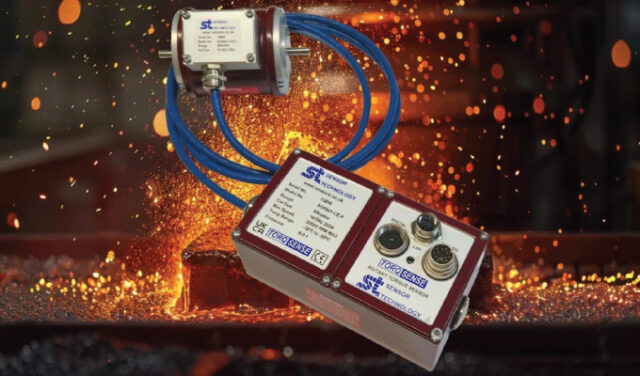
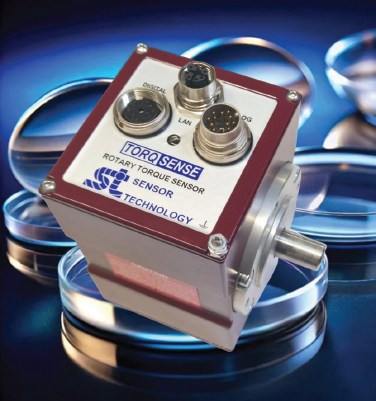
Precise monitoring of viscosity during the melting process is crucial for quality assurance in quartz glass production. In this project, a Sensor Technology TorqSense torque transducer (SGR541) was used to enable real-time conclusions to be drawn about material homogeneity, purity and the progress of material bonding.

In modern glass technology, precise control of melting conditions is of fundamental importance: the viscosity of a melt in particular has a decisive influence on its further processing, quality, and homogeneity. In the laboratory, viscosities are often determined using rotational viscometers: a spindle is rotated at a constant speed in the sample, the required torque is measured and the viscous resistance—that is, the viscosity—is determined.

THE ROLE OF VISCOSITY

In our customer’s project, this concerns the melting of quartz glass. Viscosity is not only a measure of fluidity but also allows conclusions to be drawn about the internal state of the melt—for example, cavities (air bubbles) or incomplete material bonding.

Focusing on precision glass components to improve the manufacturing process for quartz glass in terms of quality and process reliability. The challenge was that the glass is first melted at high temperatures and then has to reach a defined viscosity zone for further processing. Only in this range can it be guaranteed that the melt is homogeneous (no air bubbles), the connection or fusion of different material batches has taken place completely, the transition to the shaping or quenching/pre-forming process starts reliably.

The objective was to reliably monitor the viscosity of the quartz glass melt in order to detect deviations in the melting process at an early stage and to establish process-reliable feedback for control and quality assurance.

The viscosity of molten glass plays a key role in processing, as it determines the flowability and thus the moulding behavior, bubble removal, degassing, and homogenization. In the case of quartz glass, the conditions are particularly demanding with: high temperatures and viscosities having a strong influence on the viscosity curve. 

TORQSENSE PROVIDES ACCURACY

The TorqSense SGR541 was chosen because of its great robustness against extreme process conditions (temperatures, thermal shocks, possible vibrations) in the melting range of quartz glass with separate sensor unit and electronics. Calibration was performed using reference samples or model melts in order to map the torque/viscosity relationship in detail in the specific process setup.

The sensor was integrated into the process—typically between the motor/agitator (or melt mixing system) and the impeller (or melt stirrer)—and connected to the process control system in real time. Since torque transducers can be sensitive to lateral forces, double bearings should be used to avoid transverse forces.

The relevant target values for viscosity were defined together with the customer: e.g., a range from X to Y at temperature T, at which the melt is considered homogeneous and no bubbles are mobile.

Reference curves were created using laboratory or pilot melts with known compositions and viscosity values. This allowed the sensor output to be mapped to absolute or relative viscosity.

The sensor continuously provided torque data from which the viscosity was derived. Trend analysis enabled early detection of deviations—for example, if the viscosity did not fall within the target range, which could indicate trapped bubbles or incomplete mixing of the material batches.

As soon as the measured viscosity deviated from the target curve, measures were taken immediately: adjustment of the temperature, extension of the stirring time, addition of degassing (refining), or even return of the batch for reprocessing.

POSITIVE RESULTS

The introduction of monitoring using SGR541 had the following positive effects:

  • The melt could be continuously monitored for homogeneity and freedom from bubbles. Deviations were detected early and corrected.
  • The data obtained (torque/viscosity curves) provided valuable insights into the behavior of the quartz glass melt, enabling future process optimizations.

This method is also used successfully in other applications—e.g., plaster mixtures, coal slurries, and liquids containing magnetic particles—where conventional viscometers fail and viscosity monitoring is required. In industries such as cosmetics and pharmaceuticals—e.g., in the manufacture of shampoos or medical solutions—it is also important to monitor viscosity during mixing. This allows you to determine when the process is complete and the desired consistency has been achieved.


Sensor Technology Ltd. has been manufacturing quality torque measurement solutions and wireless load sensors for over forty years, with the growth of TorqSense sales and the launch of LoadSense and HeliNav encouraging rapid expansion and investment. For more information, visit www.sensors.co.uk.

ABB SIMPLIFIES NEMA MOTORS WARRANTY PROCESS

To enhance customer experience and provide a high level of visibility and control, ABB has streamlined and simplified its process for submitting and tracking warranty requests for ABB and ABB Baldor-Reliance NEMA motor lines. Customers can now submit a warranty request directly, and any member of the ABB team, from district offices to sales and technical support, can assist with the process.

For customers, one login connects the entire user experience. Any customer registered with ABB Shop, Motor Connector or any other ABB e-commerce or service system is already registered for the warranty claims system. The simplified input process allows requestors to quickly select from the most common types of warranty requests, and the status widget allows customers to follow the ticket throughout the entire process. In addition, a request check box option allows users to create a PDF report once a claim is opened, providing visibility and tracking. All parties involved in the claim – customers, district offices and service shops – receive status notifications for 360-degree accountability.

All ABB and ABB Baldor-Reliance motor products are warranted against defects in workmanship and materials.

MOUVEX CELEBRATES 120 YEARS

Mouvex, part of PSG, a Dover company, and a leading manufacturer of positive displacement pumps, is celebrating its 120-year anniversary in 2026. Headquartered in Auxerre, France, Mouvex was founded in 1906 by engineer André Petit. Recognizing the limitations of gear and lobe pumps available at the time, Petit invented an entirely new solution: the eccentric disc pump, a design that would become the foundation of the company’s legacy.

“Innovation has been part of Mouvex since day one,” says Brian Battle, vice president – industrial business unit at PSG. “When André Petit invented the eccentric disc pump, he didn’t just solve a problem. He set a new standard for advancing our technology, enabling operators to run applications with greater safety, efficiency and reliability.”

As demand for high-performing pump technologies grew, Mouvex expanded its reach beyond France. A key milestone came in 1997 when Mouvex joined Dover Corporation, further strengthening its global footprint. In 2009, Mouvex became part of PSG, a broader portfolio of pump and flow control brands, positioning the company to serve customers globally.

YASKAWA AMERICA ACQUIRES VARIADORES SAS

Yaskawa Electric Corporation and Variadores SAS announce that Variadores SAS has been completely acquired by Yaskawa America, Inc., the wholly owned subsidiary of Yaskawa Electric Corporation.

The entire management and staff of Variadores will remain in place with headquarters in Bogotá, and additional locations in Medellín, Cali, and Barranquilla. Variadores has partnered with Yaskawa as an independent company since 1991 and has grown to become today’s top variable speed drive supplier in Colombia. Variadores supplies low and medium voltage Yaskawa Drives across all the major industrial, municipal, and commercial automation segments, capped with a very large presence in the oil and gas market segment.

Yaskawa America President and CEO Mike Knapek explains, “I have been directly involved with this partnership for the last 25 years of this 35-year partnership. Rarely have we had a partner that was more lockstep with our customer-centric philosophy of providing the highest quality solutions backed with the very best automation knowledge and customer service. For many years, it has been like we were already one company, and now we are formalizing that.”

EMERSON ANNOUNCES OPTIMIZE 26 CONFERENCE FOR ASPENTECH USERS

Emerson announces Optimize 26, the premier event for users of AspenTech solutions, held May 11 through 14, 2026 in Houston. The conference will bring together 1,300 attendees from more than fifty countries to discover how advanced optimization technologies, including industrial AI and operational data management, are shaping the future of industrial innovation.

The event, themed “Powering Performance,” will include a new Innovation Zone with interactive technology hubs and dedicated tracks for the process and power and utilities industries, allowing customers to select an experience tailored to their specific industry. Executives, operational leaders and users will hear from more than eighty peers about real-world examples of operational excellence, digital transformation, and sustainability, while experts from Emerson’s Aspen Technology business will share the latest software innovations driving industry change.

“Optimize is where our community of process and power and utilities customers come together to shape the future of industry,” says Vincent Servello, president of Emerson’s Aspen Technology business. “With most of the agenda delivered by customers, attendees connect directly with peers to share experiences and learn from each other’s success.”

MASTERCAM COMPLETES ACQUISITION OF IN-HOUSE SOLUTIONS

Mastercam Canada, an affiliate of Mastercam, a leading CAD/CAM software provider and part of the Sandvik Group, announces the successful close of its strategic acquisition of In-House Solutions, a longtime Mastercam channel partner. With the transaction complete, In-House Solutions is now operating as Mastercam Canada, expanding Mastercam’s direct presence across the Canadian manufacturing market.

This transition brings together In-House Solutions’ deep regional expertise with Mastercam’s global technology leadership, enabling faster response times, more personalized service, and enhanced customer support for manufacturers throughout Canada. 

“This marks an important milestone for Mastercam and for our customers in Canada,” says Russ Bukowski, president of Mastercam. “By bringing In-House Solutions fully into the Mastercam organization as Mastercam Canada, we are strengthening our local connections while delivering the full power of Mastercam’s global resources. Customers will benefit from closer collaboration, faster technical support, and solutions tailored to their regional manufacturing needs.”

The move from a channel partner model to direct operations enables Mastercam Canada to provide accelerated problem resolution, customized training programs, and regional specialists who understand the unique challenges facing Canadian manufacturers.

ABB FACILITY SETS BENCHMARK FOR LOW-CARBON MANUFACTURING

ABB announces that its production facility in Zibo, Shandong province, China, is delivering measurable energy and emissions reductions through the implementation of advanced digital energy management and electrification solutions.

Driven by a site-wide sustainability roadmap focused on energy efficiency, electrification, renewable electricity and digital energy management, the site has cut energy consumption by 71 MWh and avoided over 63 tons of carbon emissions annually, equivalent to the electricity needed to power several hundred average homes for a month.

The facility has implemented a range of efficiency upgrades across core operations. LED lighting has been installed, air conditioning systems have been optimized based on real-time occupancy data, and upgrades to air compressor controls have reduced unnecessary energy use. Together, these initiatives are improving operational efficiency while lowering both emissions and costs, demonstrating how digitalization and smart energy management can accelerate low-carbon manufacturing.

The Zibo site, which manufactures wiring accessories for the Smart Buildings portfolio, has installed an ABB energy management system that monitor, analyze and optimize energy performance across the site.