

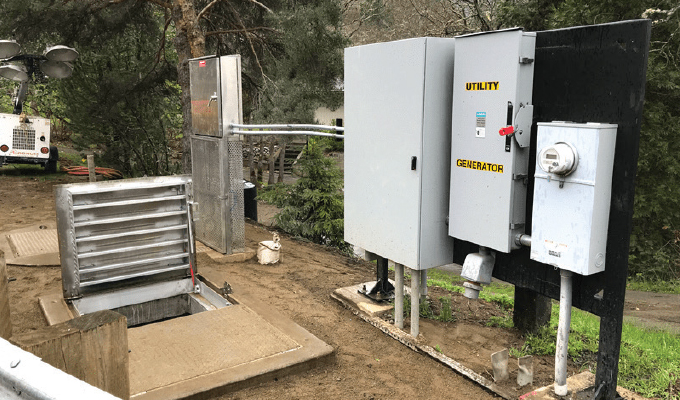
Pump systems are often out of sight and out of mind—until something goes wrong. Whether serving domestic water, wastewater, irrigation, or fire protection applications, pumps are mission-critical assets that demand reliable operation. As infrastructure ages and staffing levels remain lean, continuous monitoring has become less of a luxury and more of a baseline expectation.
Not all monitoring solutions are created equal, however. In practice, pump system monitoring can be categorized into three distinct levels, each offering increasing degrees of visibility, functionality, and operational control. Understanding these levels helps owners and engineers select a solution that aligns with system criticality, risk tolerance, and budget.
LEVEL 1: BASIC ALARM NOTIFICATION
Reactive Awareness Through Autodialers
The most fundamental form of continuous monitoring relies on alarm-only notification. These systems typically consist of a standalone autodialer connected to discrete alarm points within the pump control panel. Communication is commonly provided via cellular service or traditional POTS lines.
At this level, monitoring is event-driven. When a fault occurs—such as pump failure, high water level, low pressure, or loss of power—the autodialer sends a voice call, text message, or email to a predefined contact list. The system provides awareness that something has happened, but little context beyond the alarm condition itself.
What operators gain:
- Immediate notification of critical failures
- Simple, low-cost implementation
- Minimal configuration and IT involvement
What they don’t:
- Real-time system status
- Historical trending or performance data
- Any form of remote interaction
Level 1 monitoring is best suited for small or low-risk pump systems, remote installations, or facilities where staffing is readily available to respond on site. While limited, autodialers still play an important role in preventing prolonged outages or catastrophic failures by ensuring alarms are not missed.
LEVEL 2: CLOUD-BASED MONITORING
Real-time Visibility Without Remote Control
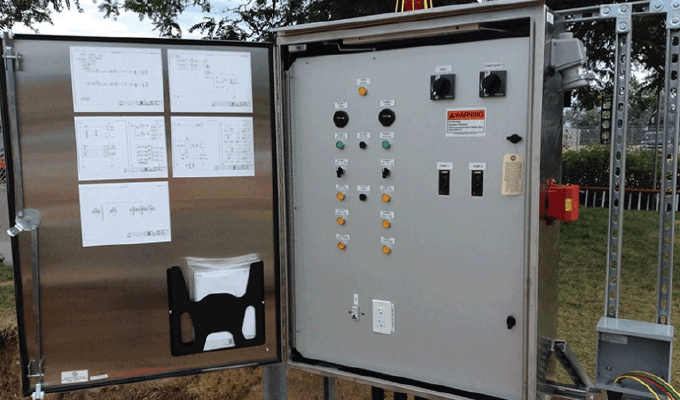
The next step up introduces continuous data visibility through an internet-connected monitoring platform. These systems use a cellular or Ethernet gateway to transmit operating data to a cloud-based dashboard accessible from a web browser or mobile device.
Unlike basic autodialers, Level 2 monitoring allows operators to see real-time values such as pressures, flows, tank levels, temperatures, and pump status. Alarm notifications are still provided, but they are now paired with context—operators can log in immediately to understand what is happening before dispatching personnel.
Importantly, these systems are intentionally one-way. Data flows from the field to the user, but no remote control is permitted. Pumps cannot be started, stopped, or adjusted from the dashboard.
What operators gain:
- Live system conditions and trends
- Historical data for troubleshooting and maintenance planning
- Improved situational awareness across multiple sites
What they don’t:
- Remote control or setpoint changes
- Remote alarm resets that affect system operation
Level 2 monitoring is increasingly popular for municipal and commercial applications, particularly where policy, cybersecurity concerns, or regulatory requirements limit remote control. It strikes a balance between operational insight and system simplicity, enabling more proactive maintenance without increasing risk.
LEVEL 3: FULLY INTEGRATED SCADA
Complete Visibility and Control
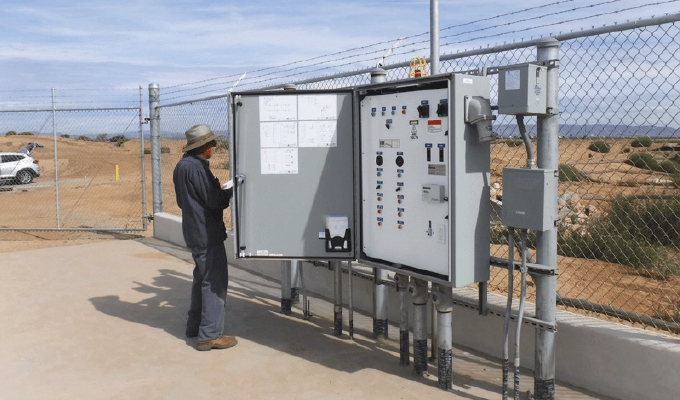
At the highest level, continuous monitoring is fully integrated into a Supervisory Control and Data Acquisition (SCADA) system. Here, monitoring and control are inseparable. Programmable logic controllers (PLCs), field instrumentation, and communication networks work together to provide a comprehensive, two-way interface between operators and pump systems.
Through secure remote access, operators can view detailed graphical HMIs, acknowledge and reset alarms, adjust setpoints, change operating modes, and start or stop equipment. Advanced systems may also incorporate automated sequences, performance analytics, and reporting tools.
What operators gain:
- Full real-time and historical system visibility
- Remote operational control
- Centralized management of multiple stations
- Faster response to abnormal conditions
What it requires:
- Higher upfront cost and system complexity
- Cybersecurity planning and user access management
- Ongoing support, training, and maintenance
Level 3 solutions are typically reserved for critical infrastructure, large municipal systems, and complex pump networks where downtime carries significant consequences. When properly designed and secured, SCADA systems offer unmatched operational efficiency and control.
Selecting the Right Level
Choosing the appropriate monitoring level is not about selecting the “best” technology—it is about selecting the right one. Key considerations include system criticality, consequences of failure, staffing models, regulatory constraints, and long-term operational goals. In many cases, facilities evolve over time, starting with basic notification and expanding toward greater visibility or control as needs change.
CONCLUSION
Continuous monitoring for pump systems exists on a clear progression: notification, visibility, and control. Each level serves a purpose, and each has a place in modern infrastructure. By understanding these distinctions, engineers and owners can make informed decisions that improve reliability, reduce risk, and ensure pump systems perform as intended—long before an alarm ever sounds.
Romtec Utilities specializes in the design and supply of the best, most practical, most affordable, and most sophisticated site-specific pumping systems available worldwide. We have completed hundreds of projects across the United States and have supplied packages for international installations. For more information, visit www.romtecutilities.com.