

Miss part 1? Read it here.
In the first part of this series, we demonstrated how vertical turbine pumps (VTPs) are an essential element of modern fluid systems. These pumps are renowned for offering strong, reliable, and efficient pumping across many applications. Below, in this month’s conclusion, we’ll take a close look at these considerations and how they can influence pump selection and performance.
OTHER KEY FACTORS TO CONSIDER FOR VERTICAL TURBINE PUMPS
When selecting a vertical turbine pump, it’s essential to evaluate several critical factors in addition to NPSH that impact performance and reliability. These pumps require the expertise of manufacturers skilled in advanced engineering and precision quality manufacturing to ensure optimal functionality and long-term durability. Some of these factors include:
Vibration
Managing vibration in VTPs is crucial for reliability, efficiency, and extending equipment lifespan. Excessive vibration can cause premature wear, component damage, and decreased performance. In one method to minimize vibration, manufacturers focus on separating the pump’s operating frequencies from the natural frequencies of its structure.
This is achieved through precise engineering, balanced rotors, robust shaft designs, and the use of high-quality materials. Proper balance and accurate coupling alignment are also critical for addressing harmonics and ensuring optimal performance.
Finite Element Analysis (FEA) is a powerful tool used to predict the natural frequencies of VTPs and their components, enabling engineers to identify and address potential resonance issues during the design phase. By simulating the structural behavior of the pump under various operating conditions, FEA ensures that critical elements are optimized to reduce vibration risks.
Computational Fluid Dynamics (CFD) is another advanced method used to analyze fluid flow within the pump, identifying turbulent zones and flow-induced forces which may contribute to vibration.
During installation, the pump must be correctly aligned, mounted securely, and placed on a ridged foundation to reduce resonance and vibration. Regular maintenance and monitoring further help detect and resolve vibration issues early, ensuring optimal performance.
Advanced systems designed for applications requiring high reliability and performance utilize sensors to continuously monitor vibrations, enabling proactive, condition-based preventative maintenance.
Dry Running
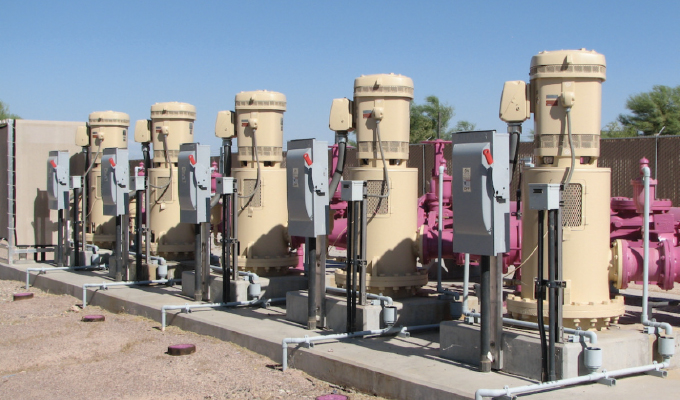
Dry running remains a significant challenge for VTPs, particularly in demanding applications such as hot water systems and scenarios with low NPSH. Dry running occurs when a pump operates without sufficient liquid, leading to inadequate lubrication and severe damage to internal components, including bearings.
Addressing this issue requires a combination of improved design practices and the integration of advanced materials to mitigate risks, enhance performance, and ensure long-term operational reliability.
Traditionally, carbon bearings were utilized in these critical conditions. However, their brittleness and handling difficulties posed significant challenges. Recent advancements in material science, including the development of advanced metal alloys and robust non-metallic materials, have significantly enhanced the capability of pumps to handle dry running scenarios and elevated temperatures. These material improvements ensure better durability, reduced wear, and increased reliability in extreme operating conditions.
Abrasives
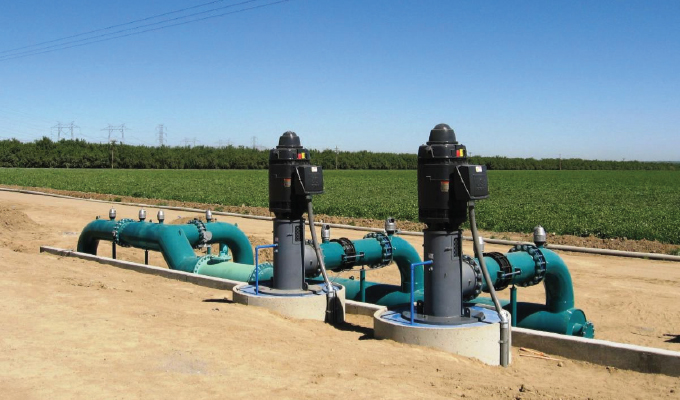
VTPs are increasingly being asked to handle abrasive fluids, a particular challenge due to the significant wear and tear abrasive particles can impose on pump components. Common abrasives encountered in VTP applications include sand, silt, and other particulate matter often present in well water or industrial processes. Several advancements in materials and design have been implemented to address these challenges effectively
From a design perspective, features such as enclosed line shaft configurations have proven highly effective. By enclosing the shaft within a lubricated tube, the design isolates the shaft from the pumped fluid, providing significant protection against abrasives. Modifications in the bowl assembly and other wetted components can be made to further enhance the pump’s ability to handle abrasive fluids efficiently.
In terms of materials, the use of advanced bearing materials with superior resistance to abrasive wear has become a standard improvement. Additionally, the application of hard coatings or surface treatments on shafts and other key components helps minimize wear caused by abrasive particles. Elastomeric and Non-metallic bearings have also gained popularity, as they offer enhanced durability in abrasive environments compared to traditional metallic options.
Application-specific practices, including regular maintenance and monitoring, are critical in detecting and addressing abrasive wear before it leads to equipment failure. Continuous product development efforts are also underway, focusing on new alloys and advanced non-metallic materials capable of withstanding high-temperature and abrasive conditions. These ongoing innovations in materials and design ensure that VTPs remain reliable and efficient in demanding applications involving abrasive fluids.
VFDs
Variable Frequency Drives (VFDs) are becoming more commonly used with VTPs due to their ability to enable variable speed operation rather than a fixed speed. This capability allows for more precise control of flow and pressure, improving energy efficiency and operational flexibility. Additionally, VFDs help optimize pump performance across varying operating conditions, reducing both energy consumption and wear.
However, the use of VFDs introduces challenges, particularly related to vibration and resonance. Operating pumps at variable speeds exposes them to a broader range of frequencies, increasing the likelihood of coinciding with the natural frequencies of the pump and motor assembly. This can result in unexpected vibration issues, which were commonly encountered in early VFD retrofits.
To mitigate these challenges, detailed structural and vibration analysis is critical during the pump design and selection process. Such analysis ensures that the pump’s operating speed range avoids natural frequencies, reducing the risk of resonance and excessive vibration. Proper evaluation and design practices are essential to ensure reliable and efficient operation when integrating VFDs with vertical turbine pumps.
NSF Certification
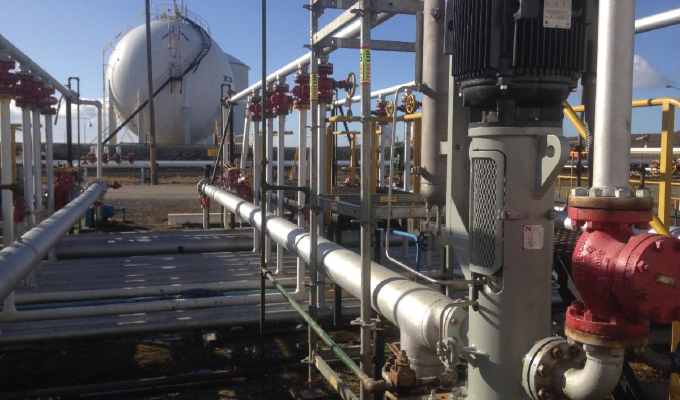
NSF certification is required for vertical turbine pumps used in municipal potable water applications, ensuring safety and quality. It verifies that materials and assembly processes do not introduce harmful substances, such as lead or toxic lubricants, into the water supply.
Maintaining NSF certification involves an ongoing process of rigorous annual material reviews and strict traceability for every pump component, ensuring that only approved, safe materials are used. Each assembly undergoes double-checks by quality teams prior to construction, with all lubricants and components verified for compliance with safety standards. Certified pumps use food-grade lubricants, follow strict assembly procedures to prevent contamination, and meet regulatory and public health standards, ensuring safe drinking water.
Municipal customers rely on NSF certification as proof that manufacturers meet rigorous safety and quality requirements. Pumps are available in various configurations, including oil-lubricated, water-lubricated, or product-lubricated options. Certified materials, such as stainless steel, aluminum bronze, or standard alloys, allow for customization to fit specific applications. Seal options for potable water applications include mechanical seals in split or single cartridge configurations or expanded PTFE yarn packing. The standard coating is Tnemec N-140 Pota-Pox Plus to provide long-lasting protection of the steel components.
ADVANCING A TIME-TESTED TECHNOLOGY
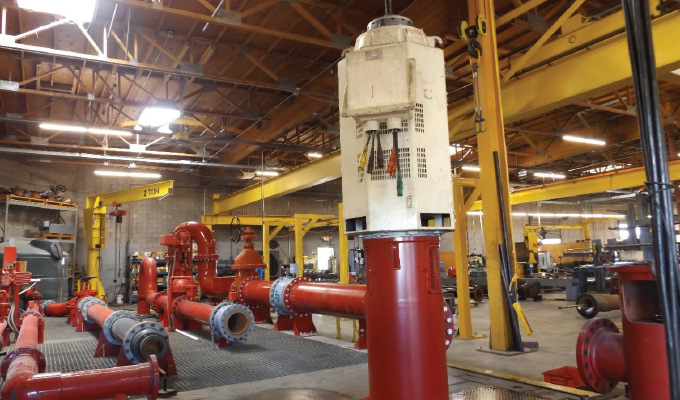
Vertical turbine pumps represent a well-established and reliable technology that has stood the test of time. Despite their maturity, these pumps continue to evolve to meet modern demands through advancements in materials, engineering, and design features. Working with a manufacturer that possesses deep expertise in pump design, hydraulic dynamics, harmonic analyses, and state-of-the-art testing facilities is crucial. Such expertise ensures optimal performance, efficiency, and the ability to tailor solutions for even the most challenging applications.
Alan Hummer, national sales manager, joined NPC in 2021 as a regional manager. Hummer, like so many people in the pump industry, came into the industry after attending one of the country’s many maritime academies: Maine Maritime Class of ’85. Working in pump sales in the New England area for over thirty years, Hummer brings with him a wealth of experience, not just in pumps, but also in other aspects of technical sales and engineering. Lucas Jones is a mechanical engineer with fourteen years of experience specializing in the design, analysis, and testing of complex mechanical systems for rotating machinery, automotive, and defense applications. He is currently director of engineering at National Pump Company. Jones holds a B.S. in mechanical engineering from Washington State University, maintains ISO 9001:2015 internal auditor certification and Department of Defense security clearance, and enjoys hands-on troubleshooting and rebuilding machinery in his spare time. For more information, visit www.nationalpumpcompany.com.