

For decades, farmers across the United States have relied on biosolids to help increase yields and supply nutrients critical to their crops. A 2018 report by the National Biosolids Data Project found that 53 percent of wastewater solids are treated and recycled to soils as biosolids fertilizer and soil amendments.
The agency reported about 18 percent of all U.S. agricultural lands could be using biosolids as fertilizer, covering almost 70 million farmland acres. Biosolids give farmers an opportunity to plant essential nutrients, such as nitrogen, phosphorus, and potassium. With farmers facing a host of economic pressures—in September, a survey reported 46 percent of farmers believed the United States was on the brink of a farm crisis—the use of biosolids as fertilizer helped many of them contain costs.
Some communities, however, are forcing farms to dramatically curb the use of biosolids. Treated sewage sludge used as fertilizer contains high concentrations of “forever chemicals” known as PFAS (per- and polyfluoroalkyl substances). The chemicals are found in many consumer products, such as food wraps, carpeting and clothing. Some of those chemicals are associated with health problems, including cancer, liver damage, and decreased immune response to vaccines.
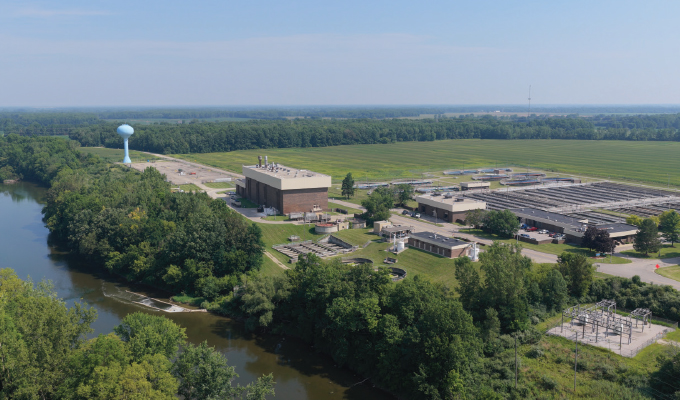
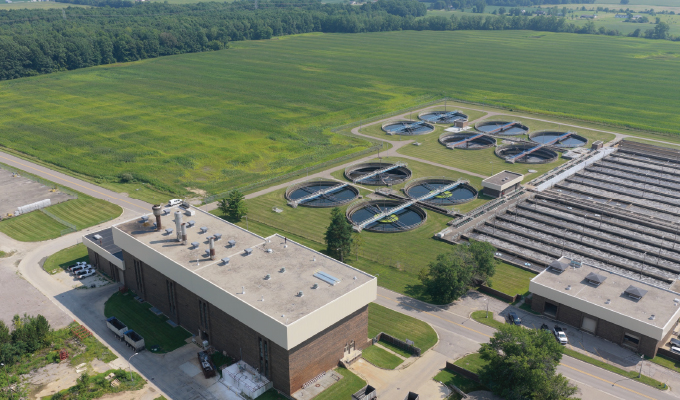
Genesee County, Michigan, includes nearly 120,000 acres of farmland. The Genesee County Drain Commissioner—Division of Water and Waste Services (GCDC-WWS) recently installed equipment that will enable the transition of sludge disposal via land application to landfill disposal. While the new plan eliminates biosolids as fertilizer for farmers, the public health benefit is considerable.
PROJECT AT A GLANCE
What: The Genesee County Digestion and Dewatering Facility was a three-year, $9.5 million retrofit of an existing building that includes the installation of two dewatering centrifuges.
Why: The new dewatering equipment was necessary to support a change in sludge disposal practices from land application to landfill disposal.
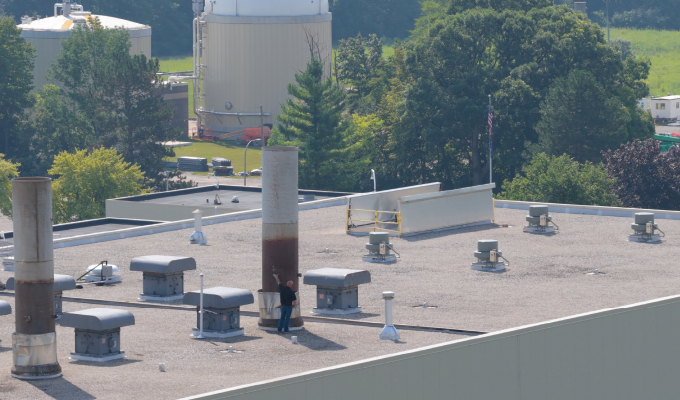
Centering on centrifuges: The centrifuges are capable of processing 250 GPM of sludge, and weigh a staggering 18,500 pounds. They were installed on the top floor of the building after the removal of vacuum presses associated with obsolete incinerators.
Up and over: Installation of the centrifuges challenged the project team, which used heavy operating equipment to lower them through a 22-foot roof hatch manufactured by BILCO.
Did you know? Dewatering reduces the volume of sludge and saves money on storage and transportation.
PROJECT SCOPE
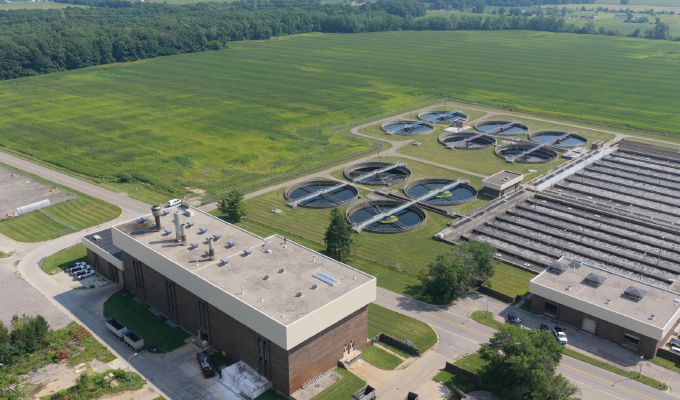
The project included a building retrofit in which workers installed two dewatering centrifuges to process a combination of primary waste and digested sludge. The three-year, $9.5 million project to construct the Genesee County Digestion and Dewatering Facility included removing vacuum presses associated with obsolete incinerators and installing the centrifuges, which are capable of processing 250 GPM of sludge.
“The sludge dewatering improvements provide an efficient means of preparing the sludge for landfill disposal while also significantly reducing the volume of sludge requiring disposal. The need to install sludge dewatering equipment arose from a shift in sludge disposal practices,’’ according to the GCDC-WWS.
Michigan adopted a plan to reduce PFAS in wastewater biosolids in 2018. The Michigan Department of Environment, Great Lakes, and Energy said the initiative has resulted in a substantial reduction in PFAS concentrations since the program was implemented and added an interim plan in 2021 for land application of biosolids containing PFAS.
The project scope also included installing a sludge feed pump, sludge screen, polymer feed system, a sludge cake pump with associated piping to discharge sludge cake to an existing loading area, piping to convey primary sludge to the feed well for the centrifuge, and piping associated with new equipment.
It also involved modifications to the electrical equipment for the new process equipment and to consolidate the existing electrical equipment, modifications to the instrumentation and control system, modifications to the heating and ventilating equipment, and roof modifications.
ADVANTAGES OF DEWATERING
Dewatering is not a new process. It has been used for nearly 100 years, and removes water and produces a drier material, referred to as a cake.
The process offers several advantages, primarily reducing volume and saving money on storage and transportation. It also eliminates free liquids before landfill disposal. Centrifuges also offer lower overall operation and maintenance costs and require minimal operator attention. Operators also have reduced exposure to pathogens, aerosols, hydrogen sulfide and other odors, according to the EPA.
Sludge transport also poses leak and spill risks. Dewatering creates cakes with consistent levels of dryness, and using high-solid dried cakes eliminates the risk of leaks or spills during transportation and storage.
The dewatering process is sustainable. Separating water for treatment ensures that wastewater won’t seep into the ground at any point in its life-cycle and reduces the need for new water to enter the process cycle. With less waste for disposal and fewer transportation requirements, sludge dewatering also helps to reduce emissions associated with freight transportation.
UP AND IN THROUGH THE ROOF
Installing the huge centrifuges on the fourth floor of the building challenged the team from Sorenson Gross, the general contractor for the project. The centrifuges are 18.75 feet long and 4.66 feet wide and weigh 18,500 pounds.
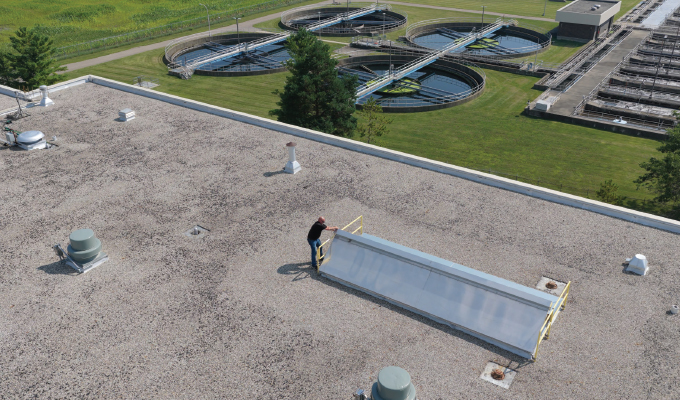
Workers used heavy operating equipment to lift and lower the centrifuges into the building through a 22-foot-long roof hatch manufactured by BILCO, the manufacturer of specialty access products. The custom-made hatch includes heavy-duty arms and chains, modified with Type 316 Stainless Steel hardware.
“BILCO was selected as the basis-of-design manufacturer of the roof hatch by the design engineer,” GCDC-WWS says in a statement. “It is understood that this selection was based on previous experience and overall product quality. The hatch met the project requirements of providing unobstructed access to and watertight closure of the roof penetration that was necessary to install and maintain the new equipment.”
“Every seven years or so, they will need to swap out the center portion of the drum. It’s easier to access the centrifuges in the building through the hatch,’’ adds project manager for Sorenson, Alex Summers.
Sorenson Gross procured the hatches through BILCO’s manufacturer’s representative, HMG Group in Farmington.
“It was nerve-wracking watching them install the centrifuges,’’ Summers adds. “It’s about 20-25 feet up in the air. We had personnel on the roof to make sure they didn’t hit the hatch as they were placing them in the building.”
INDUSTRY TRANSITION
The Genesee County project is one example of a nationwide trend. A new group, The Coalition for Sludge-Free Land, launched in May and includes nearly thirty local, regional, and national environmental organizations. The group is advocating an end to the practice of using biosolids as fertilizer.
Biosolids can also contain heavy metals, pharmaceuticals, microplastics, and other pollutants that are not fully removed during wastewater treatment. Land application can reintroduce those contaminants into the environment.
Farmers also recognize the harmful impact of forever chemicals. In Texas, farmers allege their land was contaminated by the spreading of biosolids, and that some of their animals tested with exorbitant PFAS levels. The farmers filed a suit against the EPA, but it was dismissed by a federal judge.
As the impact of PFAS becomes more heavily scrutinized, it’s likely that more communities will switch from using biosolids as fertilizer to landfilling due to health concerns.
Thomas Renner writes building, construction, and other trade industry topics for publications throughout the United States. The BILCO Company has served the building industry since 1926. During these years it has built a reputation among architects, engineers, specifiers, and the construction trades for dependability and for products that are unequaled in design and workmanship. For more information, visit www.bilco.com.